
Key Points
- Clear structural shift: Mexico’s tobacco and nicotine use is showing a pattern of declining combustible tobacco use and rising e-cigarette use.
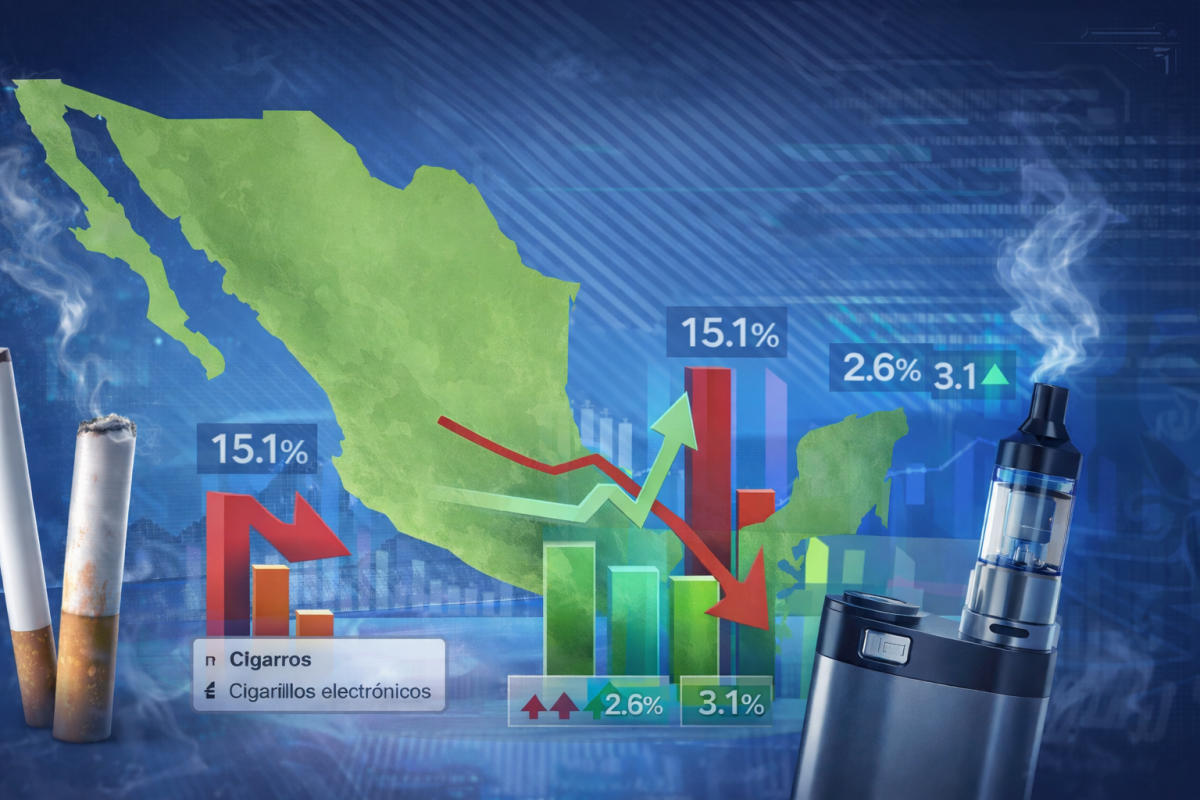
- General population (ages 12–65): Past-month combustible tobacco use fell to 15.1% (from 17.6% in 2016), while past-month e-cigarette use rose to 2.6% (from 1.1% in 2016).
- Gender differences: The decline in combustible tobacco use was driven mainly by men (27.1% → 22.8%), while women remained broadly stable (8.7% → 8.0%). E-cigarette use was higher among men (3.4%) than women (1.9%).
- Adolescents (ages 12–17): Past-month combustible tobacco use dropped to 2.0% (from 4.9% in 2016), but past-month e-cigarette use increased to 3.1% (from 1.1% in 2016). The report notes no reported nicotine pouch use among this age group.
- Adults (ages 18–65), product breakdown: Past-month use rates were 0.4% for smokeless tobacco, 0.5% for heated tobacco products (PTC), 2.6% for e-cigarettes, and 0.1% for nicotine pouches.
2Firsts, Dec. 25, 2025 —ENCODAT 2025 (Mexico’s National Survey on Drug, Alcohol and Tobacco Consumption) indicates a structural shift in tobacco and nicotine use: combustible tobacco use declined while e-cigarette use increased.
The report notes that ENCODAT 2025 added specific questions to measure other tobacco products (including smokeless tobacco such as chewing tobacco/rapé/snus and heated tobacco products, PTC), and also incorporated emerging nicotine products such as e-cigarettes (vapeadores) and nicotine pouches.
For the total population aged 12–65, last-month combustible tobacco use was 15.1%, down from 17.6% in 2016; the report attributes the reduction mainly to men (27.1% to 22.8%), while women remained essentially unchanged (8.7% to 8.0%). Last-month e-cigarette use in the same 12–65 population was 2.6% (3.4% men, 1.9% women), up from 1.1% in 2016.
Among adolescents aged 12–17, last-month combustible tobacco use fell from 4.9% in 2016 to 2.0% in 2025, with declines observed in both males and females (6.7% to 3.2% for males; 3.0% to 0.7% for females). In contrast, last-month e-cigarette use among 12–17-year-olds was 3.1% (3.5% males, 2.6% females), higher than the 1.1% observed in 2016. The report also states that no nicotine pouch use was reported in this age group.
For adults aged 18–65, ENCODAT 2025 reports last-month use rates of 0.4% for smokeless tobacco, 0.5% for heated tobacco products (PTC), 2.6% for e-cigarettes, and 0.1% for nicotine pouches.
Among combustible tobacco users aged 12–65, 74.8% reported interest in quitting; 57% made at least one quit attempt in the past year; and 16% stopped using combustible tobacco in the past year.
The report also notes: health warnings on cigarette packs led 39.1% of smokers to think about quitting; pictorial warnings prevented smoking a cigarette in 27.1% of cases; offline advertising/promotion/sponsorship decreased from 37.6% (2016) to 32.3% (2025), while internet advertising/promotion/sponsorship increased from 17.6% to 27.3%.
Cover Image source: ChatGPT
We welcome news tips, article submissions, interview requests, or comments on this piece.
Please contact us at info@2firsts.com, or reach out to Alan Zhao, CEO of 2Firsts, on LinkedIn
Notice
1. This article is intended solely for professional research purposes related to industry, technology, and policy. Any references to brands or products are made purely for objective description and do not constitute any form of endorsement, recommendation, or promotion by 2Firsts.
2. The use of nicotine-containing products — including, but not limited to, cigarettes, e-cigarettes, nicotine pouchand heated tobacco products — carries significant health risks. Users are responsible for complying with all applicable laws and regulations in their respective jurisdictions.
3. This article is not intended to serve as the basis for any investment decisions or financial advice. 2Firsts assumes no direct or indirect liability for any inaccuracies or errors in the content.
4. Access to this article is strictly prohibited for individuals below the legal age in their jurisdiction.
Copyright
This article is either an original work created by 2Firsts or a reproduction from third-party sources with proper attribution. All copyrights and usage rights belong to 2Firsts or the original content provider. Unauthorized reproduction, distribution, or any other form of unauthorized use by any individual or organization is strictly prohibited. Violators will be held legally accountable.
For copyright-related inquiries, please contact: info@2firsts.com
AI Assistance Disclaimer
This article may have been enhanced using AI tools to improve translation and editorial efficiency. However, due to technical limitations, inaccuracies may occur. Readers are encouraged to refer to the cited sources for the most accurate information.
We welcome any corrections or feedback. Please contact us at: info@2firsts.com